The Scholars Studios program has entered its second year with expanded access to 9th graders as well as more classes directly geared to the studios.
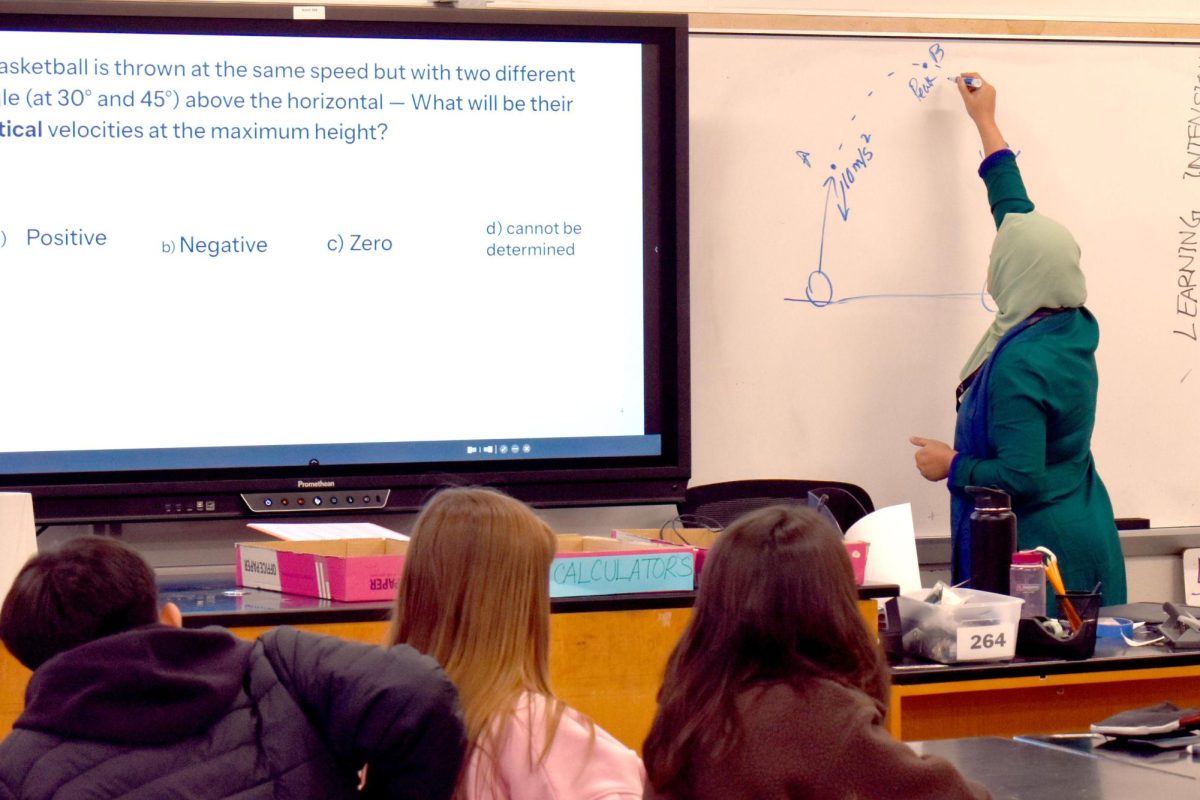
The Scholars Studios involve a set of prescribed classes for students with an interest in a specific career. This year, all freshmen enrolled in a Scholars Studio are taking a required Scholars Physics class. Students usually take physics as juniors or seniors, after taking Algebra 2. While conventional physics focuses more on math, “In Scholars Physics, it’s more based on hands-on activities,” Scholars Physics teacher Asia Haque said.
Haque offers instruction by using a Claim, Evidence, Response (CER) teaching style.
“At first they predict something about the investigation, then they run the investigation, and then they see what happens in real life,” Haque said. “They try to compare their prediction to the reality, and then we address the physics concept to address any type of misconception.”
Scholars’ Physics classes are honors-level classes, but teachers have modified the curriculum to better accommodate freshmen, which means they spend more time creating customized lesson plans.
Physics is not the only class that has been adapted for the Scholars Studios. A few sections of English 10 are also designated as Scholars classes. Instead of a completely altered approach to the subject, Scholars English 10 teachers received a loose framework for how their classes would be structured.
“It’s not vastly different, honestly, it’s still an honors-level course… There is a heavier focus on nonfiction because we want each of the studios to have something they can connect to,” Scholars English teacher Angie Heaps said. “We are trying to make sure we can make those connections to the different studios, so that there’s a feeling that that’s more of a universal approach.”
Heaps mentioned The Immortal Life of Henrietta Lacks by Rebecca Skloot as an example of a nonfiction book that connects to medical or science-based Studios.
“We are making it so that all of our discussions and questions are based around, how does this apply? Beyond the classroom, how does this apply once you go out into whatever field you happen to be in? Maybe you’ll never write another essay, right? Maybe you’ll never discuss Animal Farm, but there’s a good chance the skills that you take from this class should apply everywhere,” Heaps said.
Shifts in curriculum require lots of planning to do it well. Some Scholars Studios teachers said they have had enough time to prepare the curriculum and lessons, while others said they want more time to meet with other teachers in person.
“I’m doing the same thing, but I’m ordering it in a different way. So for that, I need to make my own worksheets…overall, to plan, I’m spending more time,” Haque said. “When all the teachers sat together (over the summer), we really had a very effective time. I think we can meet more frequently.”
Scholars English 10 teachers also had the summer to plan. “Originally, there was a very long list of books they wanted to add to our already pretty stuffed curriculum. And we argued against that,” Heaps said. Eventually, ACPS agreed to a “loose framework” for the English teachers to use in their planning.
Teachers seem to have varying opinions about the program, each with their own suggestions and inclinations about the studios.
“I like the idea of being able to search out your passion. I like the idea of being able to try these things, kind of with the safety net of school,” Heaps said. “I don’t like how much movement is involved, how students who want to do this have to be in a building one day, in a different building, another day. That just seems like a lot to balance.”
Although the program presents logistical challenges, teachers note that the Scholars Studios have helped build community and increase accessibility for students
Heaps believes that the Scholars English 10 class helps create a cohort since students come from each of the three high schools. “There’s still that sense of camaraderie and a community that’s being built.”
“I still get to teach what I love, but I also get to teach all different types of students of all different walks of life. In the academy model (MESA, Health Sciences), that just really didn’t happen just because of the different barriers,” computer science teacher Trey Barlow said.
Barlow also believes the Studios are more equitable and accessible for students.
“I really see the studios shine because right now we are shifting our demographics to really reflect what we have at Albemarle,” Barlow said, “and still having that same passionate group of kids that are coordinating and building community together.”
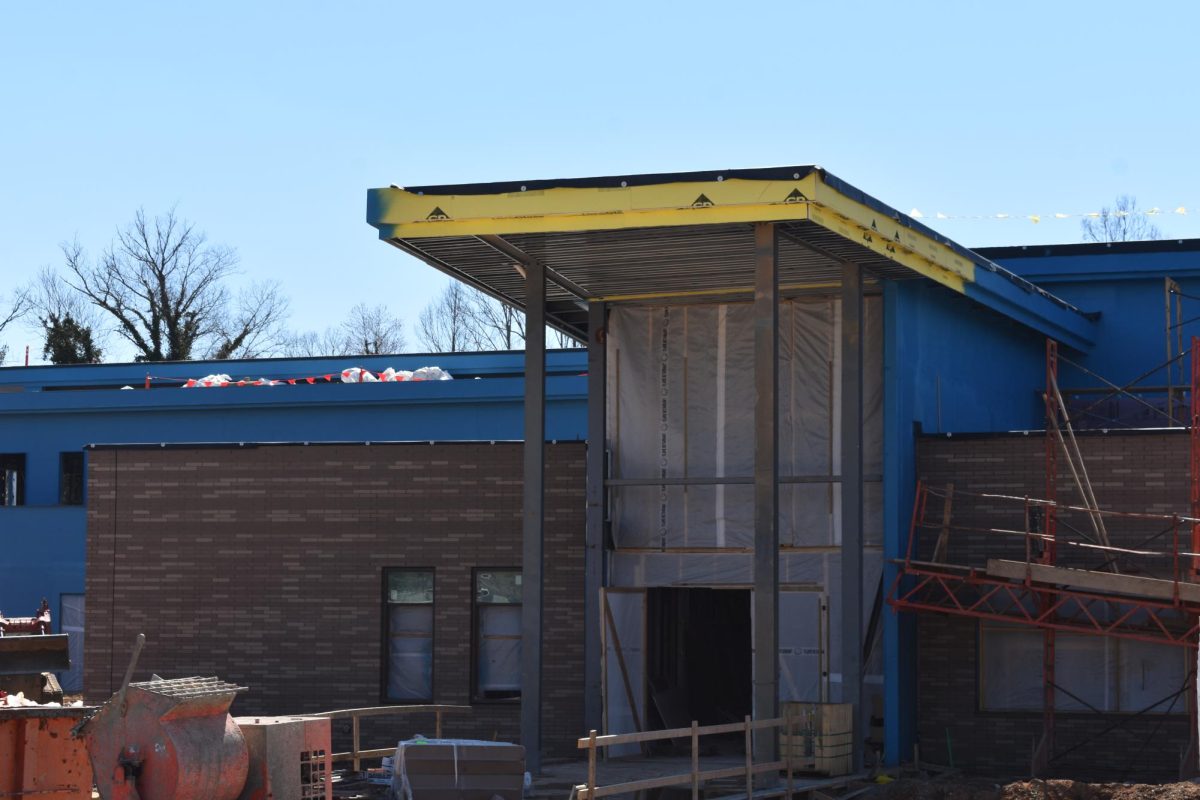
With the opening of Center II next year, ACPS is hoping that Scholars Studios enrollment will continue to increase. However, according to lead instructional coach Katina Dudley, there are no current plans to change any other existing curricula specifically for the Scholars Studios.